INSTRUCTION SET #1
The
first instruction set is the simplest of the four. The upside to this design is that it does not
require as much work as the other three designs, allowing you to finish it
quicker. If you want to just try it out
and do not care about the quality of the design, this is the instruction set
for you. This will also work well for
those who are not craftsman-inclined.
If
you have purchased other TV projection designs from eBay sellers, you will
notice quickly that these four instruction sets are higher quality than at
least 3 of the 4 designs in other plans.
We actually use bolts, staples, and glue to put our projectors
together. Most other plans use
tape. It is true, duct tape can fix
about anything, but we believe that our customers would probably prefer a
little higher quality in their projector.
PARTS IDENTIFICATION
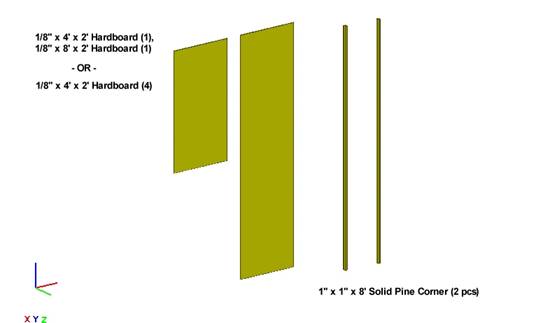
On this page, there are two "Purchase Lists" for your convience, one for Menards and one for Home Depot.
TOOLS IDENTIFICATION
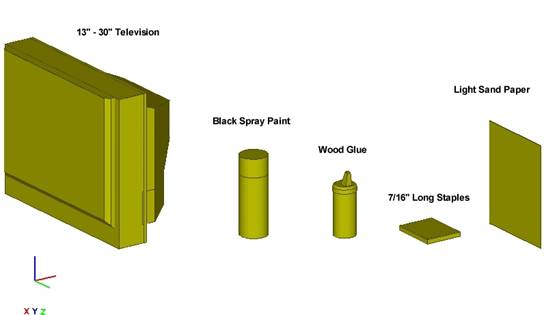
PURCHASE LIST
(The below is the list
of parts for a 13" - 25" TV sized TV.
If your TV is larger, you might need more.)
Menards:
·
15" -
22" Television N/A
·
1/8 IN x 2 FT x 4
FT Hardboard (4 pcs)
or 1/8 IN x 2 FT
x 4 FT (1 pc) & 1 pc @ 8 FT Lumber
Section - mid-left side bldg
·
1 IN x 1 IN x 8 FT
Solid Pine Corner (2 pcs) Trim Section - back-left side bldg
·
Black Spray Paint (3 cans) Paint Section - back-right side of
bldg
·
Light Sand Paper
(1 pckg) Paint
Section - back-right side of
bldg
·
Wood Glue (1
bottle) Hardware
Section - front in 3rd row
·
Staples 7/16 Heavy Fastener
Section - middle of building
Home Depot:
·
15" -
22" Television N/A
·
1/8 IN x 2 FT x 4
FT board (4 pcs) Plywood
Lane - reg #1, right side bldg
·
1 IN x 1 IN x 8 FT
Solid Pine Corner (2 pcs) Plywood Lane - reg #1, right side
bldg
·
Black Spray Paint (3 cans) Paint Section - left side bldg
·
Light Sand Paper
(1 pckg) Near
Paint Section -reg #9, Door Sect
·
Wood Glue (1
bottle) Near
Paint Section - reg #9
·
Staples 7/16 Heavy Fastener
Section
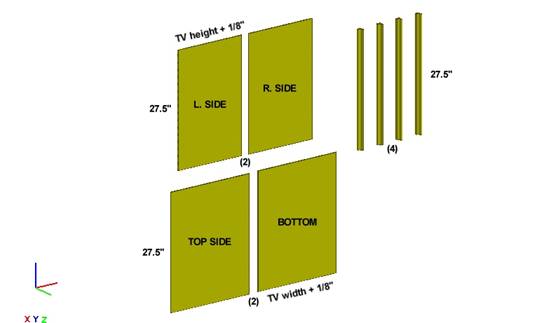
STEP #1
(Outer Box)

Cut the ply and corners to the
above measurements. NOTE: The 1/8" is the thickness of the ply sheets.
STEP #2
(Outer Box)

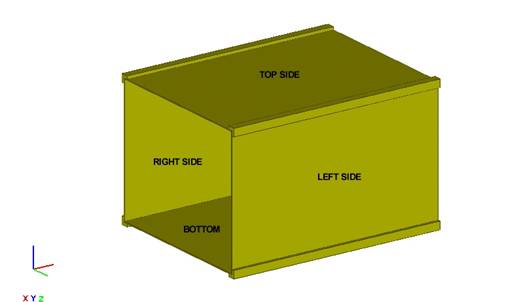
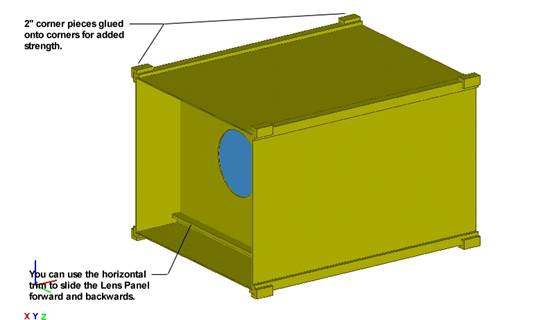
First, glue Bottom Panel and its two corner pieces together. Next, staple the panels to the corner pieces for extra strength. Do this same procedure with the Top Panel. Now, stand the assembled top and bottom and attach the side panels with glue and staples also.
STEP #3
(Lens Panel)

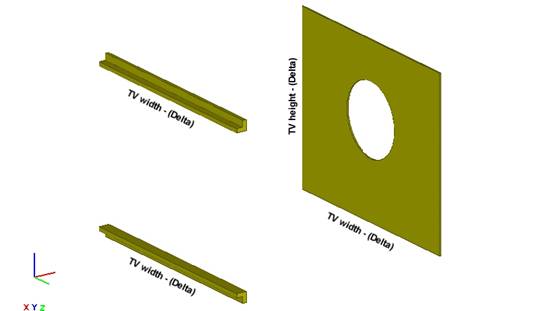
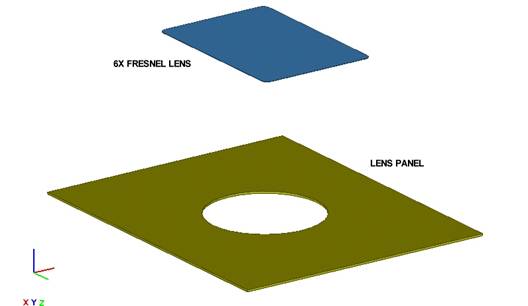
All measurements shown above are total lengths. Delta is the tolerance between the Lens Panel and the Outer Box. The tolerance is create a snug fit between the Lens Panel and the Outer Box.
STEP #4

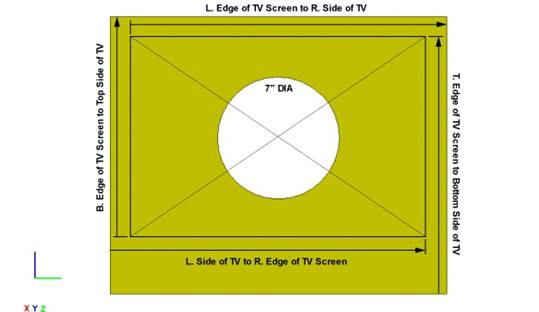
To find the center for cutting the 7 inch diameter hole, you must find the measurements above on your TV and then transfer them to the Lens panel.
STEP #5
(Outer Box
& Lens Panel)

Assemble the Lens Panel Trim(2 horizontal pieces) onto the Lens Panel using wood glue and staples. Staple the paneling to the trim and not vice-versa.
STEP #6
(Fresnel Lens & Lens Panel)

Simply tape the 6x Fresnel Lens to the front of the Lens Panel with the ridged side facing toward you. When you have completed your projector, the ridged side should be facing the TV.
STEP #7
(Outer Box
& Lens Panel)

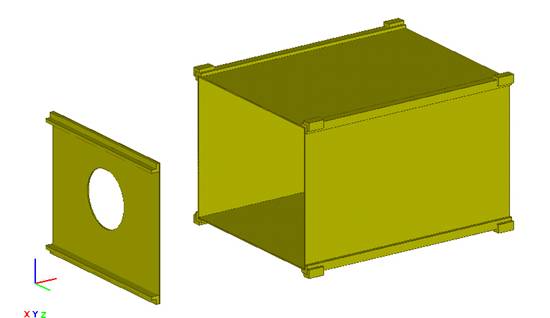
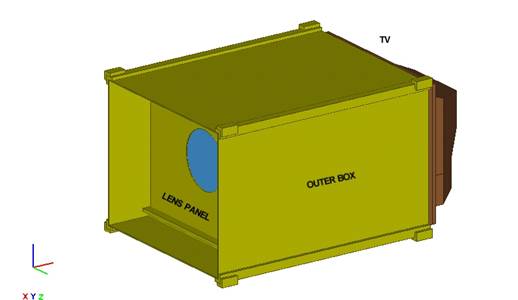
The Lens Panel is positioned within Outer Box and should fit snug. The 2" corner pieces add needed strength to the Outer Box corners to avoid cracking from pressure or movement.
STEP #8
(Completed
Design)

Now, put the TV in the other end of the Outer Box. At this point, you will now have to use a wall or screen to project the image onto. You will probably need a table to set your TV and projector on, so you can move it into focus. Then, you need to do trial and error to find the right lens position (by sliding the Inner Box in the Outer Box) and find the right table position (the distance from the projector to the screen). Try larger distances between the projector and screen to produce a better larger picture. Note: Not all lens positions will focus when moving the table back and forth. So, you need to find the right combination between the two variable positions. In the near future, I will do some complex mathematical calculations using Optics and Engineering formulas to find the optimal position of the lens and projector. This will make it much easier for future customers to find the correct position.